
When a child struggles to express themselves, parents may feel unsure of what to do. It can be frustrating, even isolating, not knowing how to support your child’s communication at home. The good news is that effective speech therapy doesn’t have to happen only in a clinic. With the right tools and consistent strategies, parents can make a real difference in their child’s progress.
Speech therapy at home is not a replacement for professional support, but it is a powerful complement. With guidance from a licensed speech-language pathologist, families can build a daily routine that reinforces therapy goals. Backed by research from organizations like the American Speech-Language-Hearing Association (ASHA), these strategies are evidence-based and parent-friendly.
Find the Right Speech Therapist for Your Child
Before starting at-home exercises, it’s essential to consult with a certified speech-language pathologist. A therapist can identify specific challenges and tailor a plan for your child. Many families benefit from a hybrid model that combines in-clinic and in-home ABA therapy, especially when behavioral or developmental needs overlap with speech goals.
Look for a therapist who encourages parental involvement, offers frequent updates, and provides at-home exercises. Consistency between sessions and home practice boosts long-term success.
Why It’s Worth Using Speech Therapy Exercises at Home
Integrating speech therapy into your home life brings powerful results. Children learn best through repetition and routine. Practicing daily, even for short periods, helps generalize skills into real-world settings. Home is a safe, low-pressure environment where children feel comfortable trying new words or sounds.
Families who engage in at-home support often see faster gains in communication, greater confidence, and stronger parent-child bonds—all key benefits of speech therapy.
Curious or Concerned?
Noticing delayed speech or unclear articulation can be worrisome. But early action makes a big difference. Whether your child is just starting to speak or has already begun therapy, practicing techniques at home can accelerate progress.
Always consult with a licensed professional to ensure your child’s needs are being met. While these strategies are helpful, they work best as part of a holistic approach.
20 Speech Therapy Tips Parents Can Use at Home

These practical strategies are easy to implement and designed to fit into your family’s daily routine.
1. Give Your Child Choices
Offer choices to encourage verbal responses. For example: “Do you want juice or milk?”
2. Model Simple Language
Keep your language short and clear. If your child says “ball,” respond with “big ball.”
3. Use Parallel Talk to Narrate What You’re Doing
Talk about your own actions in real time: “I’m washing your hands. The water is warm.”
4. Expand Your Language Into Longer Phrases
Add a word or two to what your child says. If they say “car,” you say “red car” or “fast car.”
5. Use Visuals
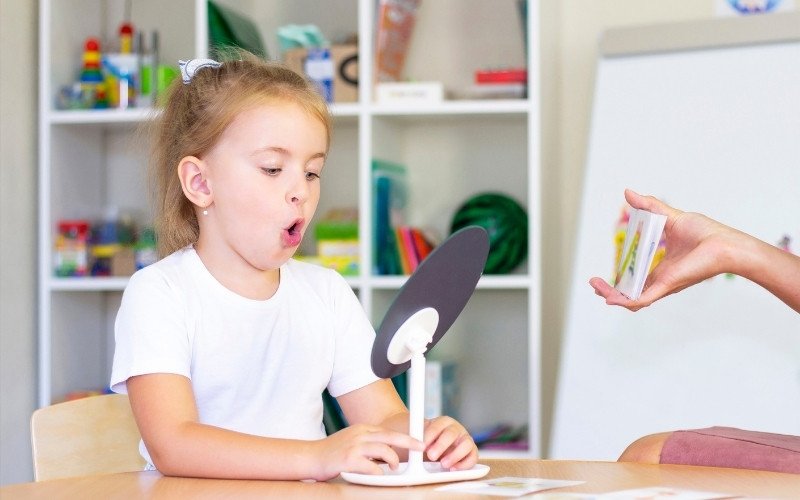
Incorporate flashcards, gestures, or object labels. Visuals help reinforce vocabulary.
6. Try Expectant Waiting
After asking a question, pause for 5-10 seconds. This gives your child time to respond.
7. Give Positive Reinforcement
Praise every effort, even small ones: “Nice try saying ‘bottle’!”
8. Try a Little Bit of Sabotage
Create small obstacles so your child has to communicate, like handing them a closed snack container.
9. Repeat Whatever Strategy You’re Using
Repetition builds familiarity. Repeat key words, sounds, or phrases during daily activities.
10. Try Teaching Sign Language
Teach simple signs such as “more,” “help,” or “all done” to support early communication.
11. Sing Songs
Singing promotes rhythm and word recall. Use songs with repetition like “Twinkle Twinkle Little Star.”
12. Use the Contingency Technique
Try “First clean up, then snack” to teach sequence and expectation.
13. Get Rid of Distractions
Turn off background noise during practice. Limit screen time when interacting verbally.
14. Read Lots of Books
Read daily. Let your child point to pictures and repeat words.
15. Be Silly
Use funny voices or puppets. Humor makes speech practice fun and engaging.
16. Start Early
Don’t wait to begin. Even toddlers benefit from early speech-building routines.
17. Make It Fun
Turn speech into a game. Use toys, movement, and songs to create a playful learning environment.
18. Model Clear Speech
Speak slowly and pronounce words clearly. This models proper articulation.
19. Capitalize on Everyday Opportunities
Talk during meals, playtime, and errands. These are ideal moments for natural learning.
20. Follow Your Child’s Interests
Use your child’s favorite toys or topics to keep them motivated and engaged.
Tips for Successfully Using Speech Therapy Exercises at Home

- Be consistent: Daily practice, even for just 10-15 minutes, makes a big difference.
- Make it interactive: Use turn-taking, eye contact, and shared activities.
- Use visual aids: Add picture cues, gestures, or objects to reinforce learning.
- Practice often: Repetition builds confidence and strengthens neural connections.
- Consult a therapist regularly: Stay updated on what strategies to use and how to modify them.
For the best results, combine these techniques with structured professional speech therapy or support from an in-home ABA therapy provider. Together, these approaches can unlock your child’s full communication potential.